
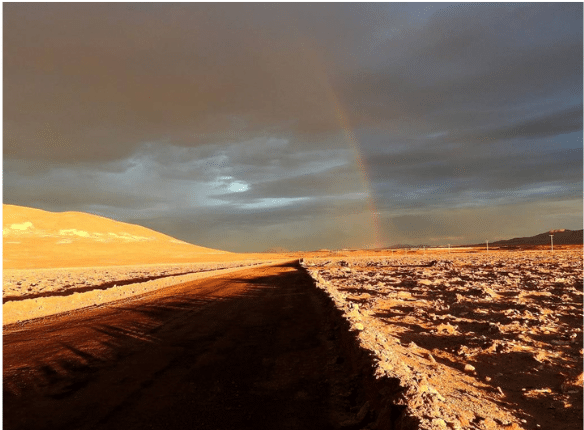
San Pedro de Atacama is famous for its clear skies and extremely dry climate. That’s why, when summer arrives and rains appear in the Altiplano, many travelers are surprised: how can it rain in the driest desert on Earth? The answer lies in a seasonal phenomenon known as Altiplanic rains (also called the Bolivian winter), which transforms the landscape and plays a key role in high-altitude ecosystems.
What are Altiplanic rains?
Altiplanic rains are seasonal precipitations that occur mainly in the Andean Altiplano (above 3,500–4,000 meters above sea level), especially during the summer months. While they are more frequent at higher elevations, their effects can be felt around San Pedro de Atacama, with cloudy skies, distant thunderstorms, and occasionally brief local showers.
It’s not that Atacama “becomes rainy,” but rather that for a few weeks in summer, a climatic pattern brings moisture that produces precipitation at high altitude.
Why do they happen? A simple explanation
During summer, humidity from the Amazon basin increases and moves toward the Andes. As this moisture rises along the mountains, it cools at higher elevations and forms convective cloud systems—large, vertically developed clouds that can generate intense showers, thunderstorms, and even hail in parts of the Altiplano.
In simple terms:
more heat + more humidity + altitude = storm clouds and Altiplanic rains.
Why are they so important for Atacama?
Although they can sometimes complicate tourism logistics, Altiplanic rains are essential for several reasons:
1) They sustain high-Andean ecosystems
The Altiplano is not just “rock and salt.” There are wetlands, bofedales, meadows, and lagoons that depend on seasonal water inputs. These environments are home to flamingos, vicuñas, and other species adapted to extreme conditions.
2) They feed rivers, ravines, and natural recharge systems
In years with more active rains, temporary riverbeds can be reactivated and water flow in ravines may increase. This helps maintain the desert’s natural dynamics, even though San Pedro remains dry most of the year.
3) They transform the desert’s landscape and skies
For travelers, this season offers a different side of Atacama: dramatic skies, towering clouds, intense sunsets, and striking visual contrasts—ideal for photography.
Is it dangerous to travel during the Altiplanic rains season?
Not necessarily, but it does require planning and good judgment. The main risk is not “rain in San Pedro” itself, but sudden rises in ravines and occasional road closures toward higher areas. For this reason, there may be preventive closures or itinerary changes on certain days for safety.
At Caminandes, we always prioritize responsible operations: if weather conditions do not allow for a safe experience, plans are adjusted. During the Altiplanic season, traveling with an operator that actively monitors conditions and makes timely decisions is essential.
Tips for traveling to San Pedro during Altiplanic rains
- Be flexible with your itinerary: some tours may be rescheduled depending on the weather.
- Check the forecast—not only for San Pedro, but also for the Altiplano.
- Pack appropriate clothing: summer in Atacama can mean daytime heat, cooler afternoons, and rapid changes at altitude.
- Choose small groups and attentive guides: this improves both the experience and adaptability.
Is it worth visiting Atacama during this season?
Yes—especially if you’re looking for a different experience. Altiplanic rains reveal another face of the desert: more dynamic, more alive, with incredible skies. You just need good planning and a reliable operator.
Book your San Pedro experience with Caminandes
At Caminandes, we design boutique tours in San Pedro de Atacama with a strong focus on logistics, safety, and a carefully curated experience. If you’re visiting during the Altiplanic rains season, we help you create the best possible itinerary based on real-time conditions, so you can make the most of your time in the desert.
Get in touch with us, and we’ll recommend the ideal tours according to your travel dates.