
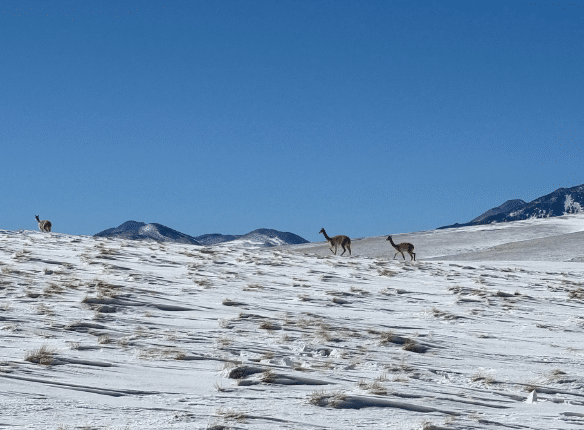
Snow in San Pedro de Atacama?
When we think of the desert, the first things that come to mind are arid landscapes, clear skies, and bright sunshine. But did you know that it can also snow in some areas of San Pedro de Atacama? Although it may sound unbelievable, this natural phenomenon occurs very rarely and completely transforms the landscape of the driest desert in the world.
A phenomenon that hadn’t occurred in over 10 years
Recently, the ALMA Observatory shared images of an unusual snowfall in the Antofagasta region. According to experts, a snowfall of this kind had not been recorded for more than a decade, making this experience truly exceptional.
“At this time of year, it’s very uncommon for the desert to receive any precipitation—let alone snow,” explained the observatory. The news quickly went viral, astonishing thousands of people around the world.
Is it snowing across the entire desert?
Although the news has made headlines worldwide, it’s not snowing throughout the entire Atacama Desert. As experts explain, the desert stretches from northern Coquimbo to southern Peru. The snowfall occurred in a specific area: from San Pedro de Atacama toward the Andes mountain range and pre-Andean region, specifically in zones located at altitudes above 3,000 to 4,000 meters.
Where can you see snow if you visit San Pedro?
If you travel to San Pedro de Atacama during the winter, there’s a chance you might see snow in high-altitude areas such as:
- Licancabur Volcano
Visible from the town, its summit is often snow-covered during the winter. - El Tatio Geysers
Located over 4,200 meters above sea level, this is one of the spots where you might witness snow if conditions are right. - Route to Piedras Rojas and the Altiplanic Lagoons
Given the elevation, there’s also a chance of encountering snow along the route during the chilly early mornings of July.
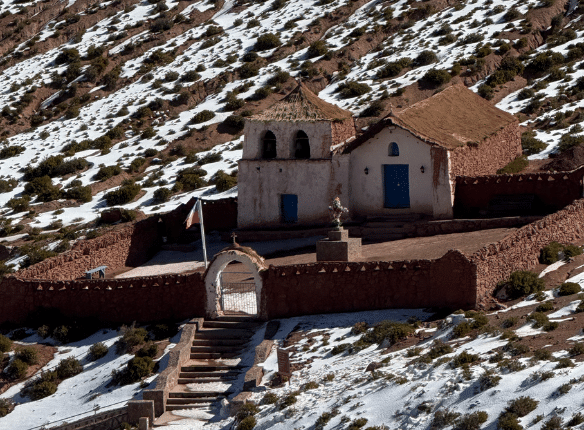
Don’t confuse salt with snow
Many travelers are surprised when visiting the Valley of the Moon and seeing a white surface covering the ground. Although it looks like snow, it’s actually a thick layer of salt that creates a similar visual effect, but has nothing to do with real snowfall.
And if there’s no snow, is it still worth visiting in July?
Absolutely! July is low season, which means fewer tourists, better prices, and spectacular astronomical visibility. Plus, the landscapes appear crisper, and if you’re lucky, you might witness a frosty or snowy sunrise in high-altitude areas—a sight you’ll never forget.
Ready to live a magical experience?
At Caminandes, we take you to the most amazing places in San Pedro: Laguna Cejar, El Tatio Geysers, Valley of the Moon, Piedras Rojas, astronomical tours, and much more. And if you’re looking for accommodation, we offer options for every style: hostels and glamping.